
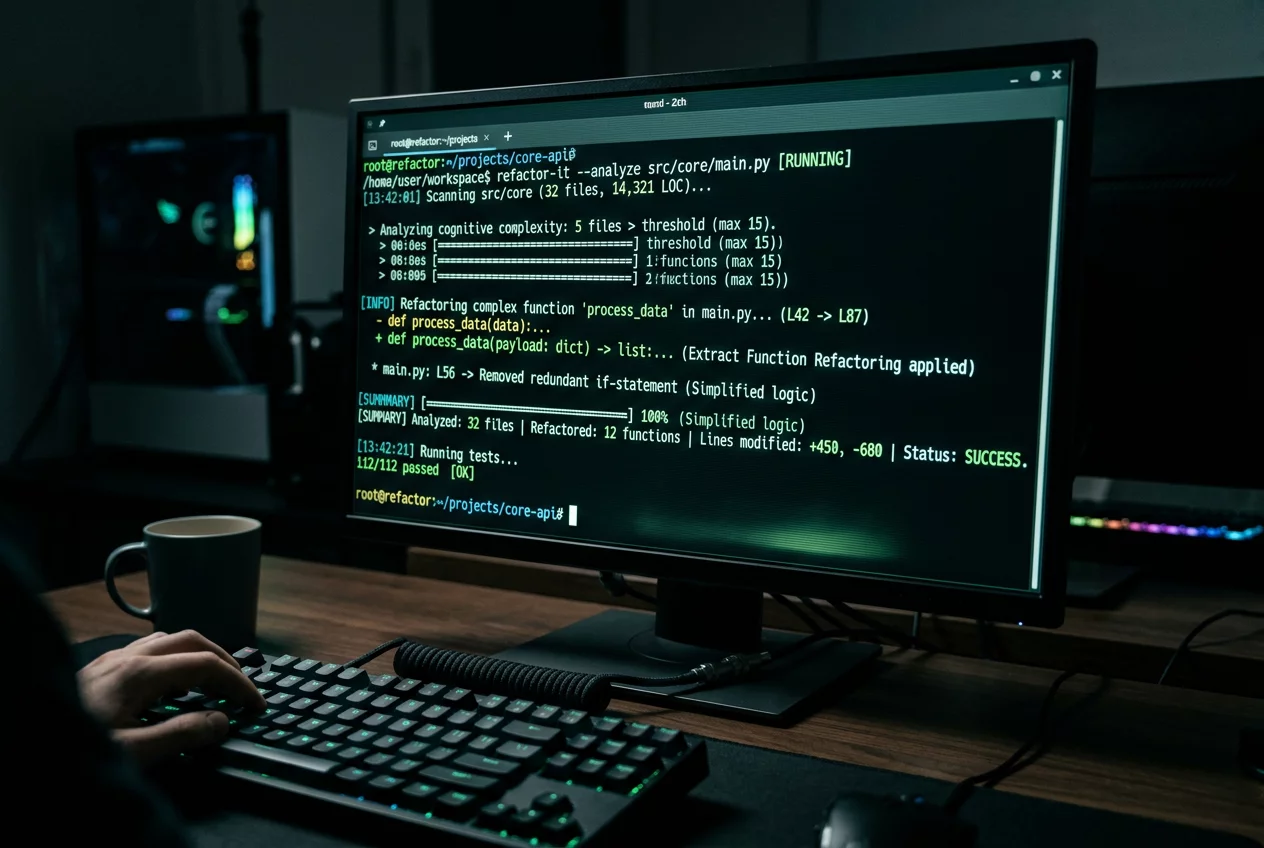
The terminal has always been the developer's primary cockpit, but the arrival of Claude Code transforms this static command line into a living, thinking partner. Unlike traditional AI extensions that sit passively in the sidebar, Claude Code operates as an autonomous terminal agent. It understands context not just from the file you are editing, but from your entire filesystem, build logs, and environment variables.
Agentic Terminal Workflows
When you give Claude Code a task—for example, 'refactor the authentication middleware to use the new session store'—it doesn't just print code blocks. It navigates your directory structure, analyzes dependencies, executes the shell commands needed to find existing implementations, and then writes the changes directly. Most impressively, it can run your test suite, read the error output, and iterate on its own code until every test passes green.
The Developer in Control
While the agent is autonomous, the user remains the ultimate authority. Every command execution and file write requires permission, or can be run in a 'monitored session' where you see every thought process the agent goes through. This transparency is crucial for security and learning. By watching how Claude Code handles a complex migration, engineers can gain insights into cleaner architectural patterns and more efficient CLI workflows.
A New Era of Productivity
In 2026, the distinction between 'writing code' and 'managing agents' is blurring. Claude Code represents the pinnacle of this shift, offering a low-latency, high-context environment that turns hours of boilerplate refactoring into seconds of task oversight. It is not just a tool; it is a force multiplier for the modern software engineer.
How does it handle private data?
The agent runs locally on your machine and only sends the necessary context to Anthropic's servers via encrypted APIs. No local data is used for training without explicit opt-in.
Discussion
No comments yet. Be the first to share your experience with Claude Code.
Leave a comment